|
As we see the final weeks of fall soccer approaching, there are a lot of great options to continue playing and growing. I've collected some contact info for options for recreational, club, and competitive development programs for all ages.
Recreational - Teams forming Winter - Bancroft Winter Soccer League (Worcester) Winter - Five Star Soccer Academy (Oxford) Winter - Teamworks (Northborough) Winter - ForeKicks (Marlborough) Spring - Mountain Soccer Club (Sterling, Rutland, Princeton, Paxton, West Boylston) - Registering now for team placement evaluations (U10/U12). Club - Many have guest player options to attend training sessions The most common question asked is, "when is it right for my daughter or son to play in a club program?". The club programs focus on long-term development and have a variety of styles to help the player grow. The "club" environment is a faster pace and a focuses on a greater cognitive/physical/technical challenge with professional coaches. Many clubs have "Junior Academy" programs that emphasize the core skills and cognitive tools for long-term development. Starting at any age has benefits, while starting younger has unique advantages for a strong foundation throughout their soccer lives. FC Stars (Worcester) - I'm a coach in the program. I can answer questions or you can connect with Dave Noel (Regional Manager). I love the development challenge players take on and the collaboration among the coaches to help them achieve their goals. NEFC (Worcester) Best FC (Westborough) Spirit of Liverpool (Oxford) GPS (MA) Competitive Development Fall/Winter/Spring Mass Youth Soccer's Town Select League (TSL - Lancaster/Worcester) Summer - Mass Youth Soccer's District Select Program (DSP - District 6 Lancaster) 6 week intensive development program. I'm a coach in the program and highly recommend it for club and competitive players looking to continue playing in preparation for their middle/high school/club programs. Best of luck in the final few weeks and let me know if I can help. [email protected] [email protected] What's the difference between playing a game and "trying out" for a team? It's the difference of belonging to something or not yet. Every game provides membership. Every tryout is asking to join in. It can be harsh and can be rewarding.
I have a vivid memory of a tryout in high school (bicycle team). I remember every detail of the format, every fear, every ounce of anticipation to get to that day, and every doubt I had. My dad gave me some great advice, "listen well and don't do anything you can't do - unless they ask you to try it. Be there and nowhere else". More on that later. The reality is that playing at a higher level comes with having to put yourself out there to be evaluated. It certainly isn't easy for a child, or even an adult.
There is so much advice people can give. My summary isn't foolproof and is based only on my experiences. Not everyone makes the team Can you work to make it next time? Get to work and use this experience to your advantage now. If you can't, move on to what's next for you and be happy that you gave it a shot. You'll never regret that. BTW, I did make that bicycle team and it transformed my life in ways I couldn't have imagined at the time as a 16-year-old. If I wouldn't have made it, I would have kept riding and found an alternative path for as long as possible. I didn't make a career out of it, but still love it like I was 16. Go for it and have fun! DSP Tryouts - http://www.mayouthsoccer.org/programs/district_six/ TSL Tryouts - http://www.mayouthsoccer.org/programs/town_select_league_tryouts_2019/ There are so many options these days to play and practice all year. Bancroft, Teamworks, Five Star, and Forekicks all have programs running. I've watched some really great games at Bancroft and look forward to see my daughter play at Fore Kicks soon. Please use the SYSA Facebook page to share your team openings and stories.
If you aren't on a team, there are still so many great options to practice at home if you have a garage or basement with some open space and a wall. Building these skills, strength, and agility take time but will help you enjoy the game more. Ball control generally equals fun at game time. Here are a few links to check out: Tobin Heath's Closed Space- https://youtu.be/rCKuWsew6ss Wall Ball - https://youtu.be/CIDMQsybncw (be sure it's a safe place to practice...try not to break anything) Dribbling Skills - https://youtu.be/L8nLeD9WdVk Agility - https://youtu.be/VchxPuX24HY Juggling - https://youtu.be/Txr2YQzsLDU One of the best ways to learn with piles of snow in your driveway is watching the game being played. Saturday mornings are full of soccer on TV and there are some great videos for all type of teams. USWNT - https://youtu.be/zV_SRK3gtls USMNT - https://youtu.be/L8N5NqCPty4 Best of luck as you gear up for the Spring, Summer, and Fall soccer! Many people think the winter is a lull in development. It doesn't have to be that way. There are so many great skills videos available nowadays to work on what I call the "micro-movements". These are the footwork basics to the dazzling techniques that get a reaction. Ball control is the main principle he's focused on. With it, you gain the advantage and build confidence. This is one of my favorites. Michael has a great approach and breaks down the techniques well. You'll also see some real examples of how these are used in games. The time you put in this winter will pay off for years to come. Building up little-by-little everyday will be evident in every game you play looking ahead. https://www.youtube.com/channel/UC9xRcqG8V6yNi6Hum92EoGg   Referees have a tough job to do regardless of the their experience, and they have to make some tough decisions in uncomfortable situations. Nobody seems to love you in those awkward moments and everybody is watching how you control the game.
I saw a really impressive example of good officiating yesterday under just these circumstances. In a game that was being played 0-0 well into the second half, a goalie makes a save right on the line. It's whistled a goal and both teams are a little confused. They don't say much except a few soft, "it wasn't a goal" remarks to each other. The referee was ~30 yards away and made a judgement call. The goalie looked bewildered and rolled the ball to midfield. The defending coach asked if this was a goal and the players on both teams quietly said "no". To the referee's credit, he walked to the goalie and asked her if it was a goal. She said, "no". He turned to the coaches and then to the parents to explain that he couldn't fully see the line and believes the goalie and the players. No goal. As the scoring coach, you can imagine there are some mixed feelings here. Do you petition for the goal or go with what looks to be the right decision. To the coaches' credit, they moved on with the game. The players, coaches, and parents saw a referee stand on an island essentially and correct a call with more information. I applaud the referee and admire his courage. We all learned a valuable lesson yesterday in judgement and fair play. We've all been coached in winning and losing situations. Sometimes we hate these people based on their behavior. Sometimes we love them too based on their behavior. Coaching has changed for the better, but it isn't perfect yet. It never will be because we all learn differently and from various places. We can be better in the same way we expect our players to continue to improve. I really love Malcolm's approach and he'd be a coach I'd love as a player. He highlights the four "L" words coaches should never use. If you see it, talk to the coach privately. If you're doing it, watch the video again and find a new approach. Our goal is to provide an avenue for kids to enjoy the game. Lousy coaches are lone of the reasons 70% kids stop playing sports by the age of 13. Let's be the reason they continue to enjoy the game and learn. 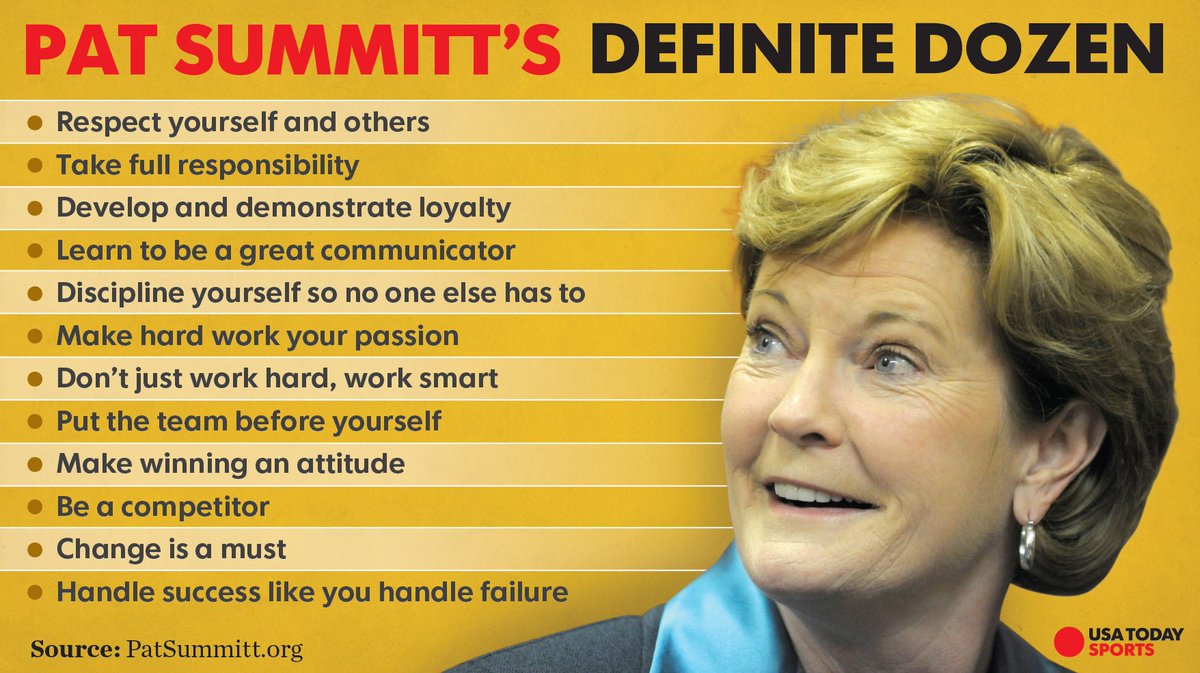 Scoring isn't always the goal. Coach Summitt set records on the scoreboard too.
What's the most important thing our kids walk away from a season having? Learning that it isn't always about scoring. Most kids don't likely have "goals" for their season at younger ages (well maybe to score goals). They want to have fun. Coaches like wins on the scoreboard, but the greater thrill is seeing your players engage in the program. What I admire about Coach Summitt is that she was all business on the court while building her players as people first. She wasn't always the gentle soul that younger players need, but her foundation is a legacy that is relevant to all ages. Set a goal as a parent or as a coach to instill any of these foundations and you'll see their smiles. Winning isn't always about the scoreboard. I also see the wins on the sidelines in a loss when the team can smile about wanting to get to practice in a few days.  For some teams, you played a game last weekend. Maybe it was your first game ever or maybe this is old hat. For some, next weekend is literally their first game of any sport. U6 and U8 teams start up Saturday 9/8. This is a big deal for the players and possibly the parents.
Don't set your expectations high. Show up and watch the kids play and encourage them to have fun. The teenage referees could be officiating their first games as well. Bottom line, have fun and enjoy the teams they are all on. There is a lot of time that goes into getting everyone on the grass, including what you've put in to get them ready. Let's enjoy it and play the game for fun. Best of luck Sterling teams this weekend!  Many of the Sterling teams have their first games this season today. For some, this is the FIRST game overall. I hope they all step into the team and find their fun. As parents we put a lot of time, effort, and money into getting them here. Now's the time to kick back and enjoy them learning the game and getting to know their team. Best of luck to everyone this weekend, and in the second game, and the third game... The season goes by fast. Have fun.
 Of everything shared in the "Being Coached" series, finding the balance in the team is one of the most challenging as a coach. The skills, experiences, and preferences of the players is a puzzle in terms of who's playing in what positions and for how long. Ideally, you want a player that is simply, "ready" and will play anywhere. This is not the norm. Find the positions they kids enjoy the most and can excel in. From there, you'll have to find a way to have them compromise when needed. How? Start with some profiles of the personalities that gravitate to some positions. This isn't definitive, but has been helpful for our teams to put kids in the best positions.  The player that loves to play goal is unique. Most look at as a punishment. It is easily the most critical position on the field at any age or competition level. It's not just to physically stop the scoreboard from piling up. It's to be the leader on the back end of the field. The goalie is an intimidator to the offense and the leader of the defense.  Defensive players are all sizes, skill levels, and speeds. No one attribute is right across the whole group. The key here is a short memory, a fierceness in their personality, and the commitment to work together. No one defensive player can dominate a game. It takes a combination of good anticipation in the game's progression and being in the right places as a unit. This can be the most dramatic place to play on the field as the goal threats are building. This is where the short-term memory attribute comes into play. Goals are not given up by the goalie or the defense. They are given up by the team. 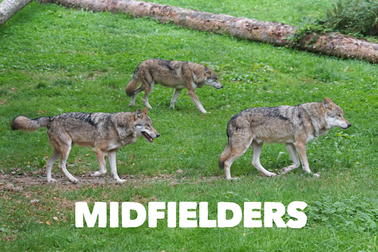 Midfielders are the center of the formation. They can feed the strikers/forwards and draw the ball out of the defensive area. A majority of the game will typically be played in the middle 50% of the field. These players may be challenged the most physically in terms of stamina, rough-housing, and mentally. For these reasons, they are like a pack of wolves. They scheme together towards small movements that add up to scoring chances. Midfielders, especially your center positions are typically the orchestrator of the offensive group as they put have the widest view of the game.  As those chances develop, you have your strikers to act fast and strike. Much like a fox, they lay low for periods of time and are quick to move to the opportunity spot. They are a part of the offensive group with the midfielders and can switch as attacking plays develop. Being sneaky, pays off here. You'll tend to see two defensive players flank one striker to prevent a one on one race if the ball drops over their line.  Where are you in the animal kingdom? Coaches are the gorilla at times. You may be scratching your head at times to find the right thing to do with all these different types of players and personalities, but you'll also have their attention as the leader. Go with your gut and stick to your principles that the kids are familiar with already. If you make the wrong choice, at least you will won't confuse the players by being inconsistent.
Don't be afraid to move players around as well. That defensive player may be able to take a nice corner kick or free kick near the goalie box. Diversity in their experiences is a good opportunity for everyone. They may love it. Find the balance for your team and experiment. |
Scott Moroney"As a coach, board member and new SYSA VP, I've likely seen and heard a lot of what you may be wondering how to manage as a parent or player. Great kids with supportive parents make it all a "once in a lifetime" experience. Archives
October 2019
Categories |
 RSS Feed